
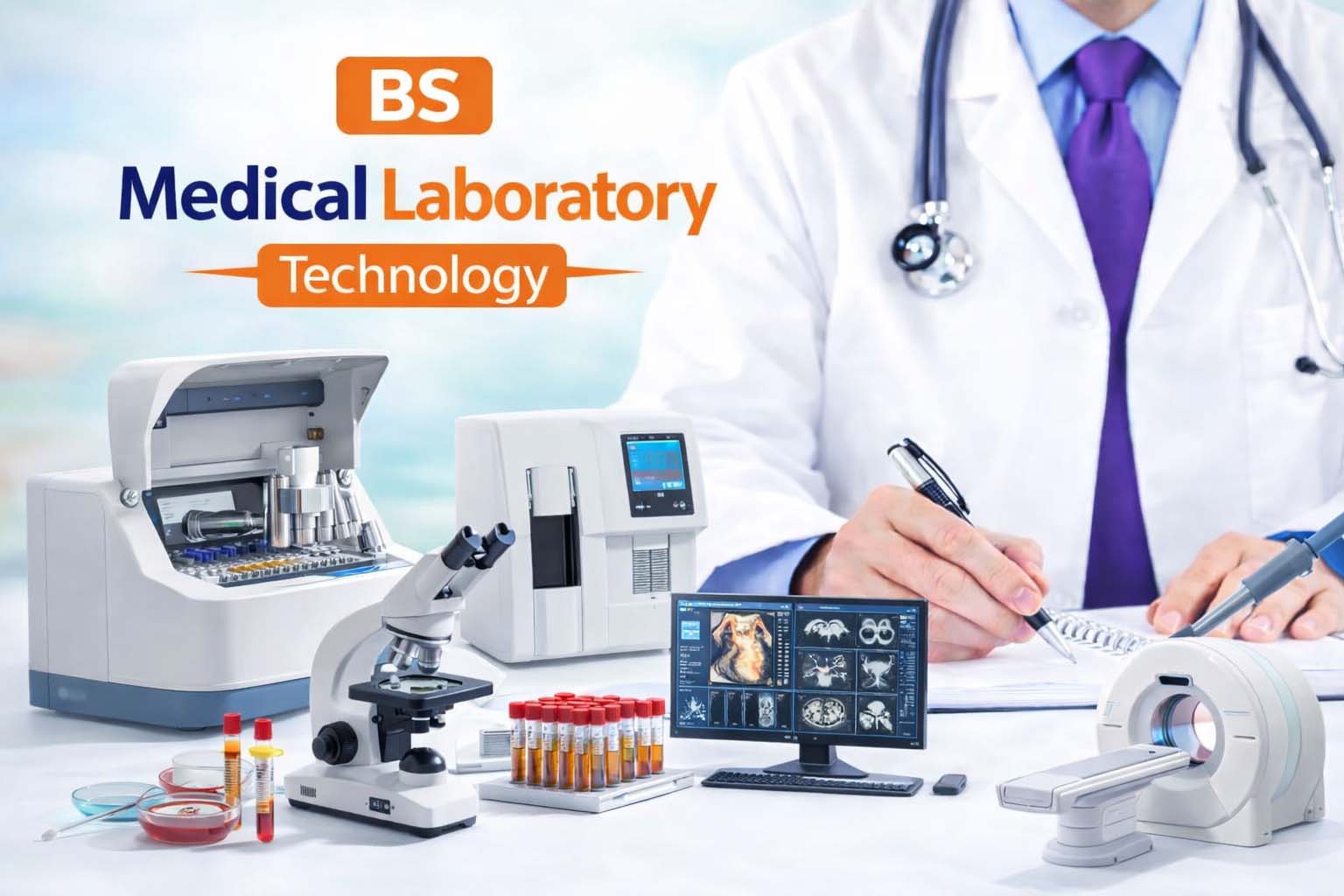
BS Medical Laboratory Technology
4 years Bachelor program
“Shape the Future of Diagnostics”
Medical Laboratory Technology is an integral component of the modern healthcare system and serves as the foundation of accurate disease diagnosis and patient management. It is both a science of diagnostics and an art of precision and quality assurance. Medical Laboratory Technology encompasses the collection, processing, examination, analysis, and interpretation of biological specimens to support the detection, diagnosis, monitoring, and prevention of diseases. Medical Laboratory Technology involves laboratory investigations related to Hematology, Clinical Chemistry, Microbiology, Immunology, Histopathology, Molecular Diagnostics, and Transfusion Medicine. Medical Laboratory Technologists play a vital role in identifying pathological conditions and ensuring reliable laboratory results through standardized techniques and quality control measures. A medical laboratory technologist strives to support clinical decision-making and improve patient outcomes by providing accurate, timely, and evidence-based laboratory information through disease prevention, diagnosis, monitoring, research support, and public health surveillance, thereby contributing significantly to the overall quality of healthcare services.
Program Goals:
Prepare competent medical laboratory professionals capable of supporting accurate disease diagnosis and patient care
Develop graduates with strong theoretical knowledge and practical laboratory skills aligned with national and international standards
Promote evidence-based laboratory practice and integration of research in healthcare diagnostics
Foster ethical conduct, leadership qualities, and professional responsibility in laboratory services
Contribute to public health, disease prevention, and community well-being through quality laboratory services
Enhance graduates’ understanding of societal, cultural, and economic factors influencing healthcare delivery
Program objectives:
Upon successful completion of the program, graduates will be able to:
1. Demonstrate comprehensive knowledge and technical proficiency in performing accurate laboratory tests and diagnostic procedures
2. Communicate laboratory results effectively through clear written reports and professional oral presentations
3. Apply evidence-based practices and incorporate research findings in laboratory investigations and quality assurance
4. Support health promotion and disease prevention through reliable, timely, and quality laboratory services
5. Practice professional ethics and exhibit leadership skills in laboratory operations and management
6. Recognize and address social, economic, and cultural factors affecting laboratory services and patient care
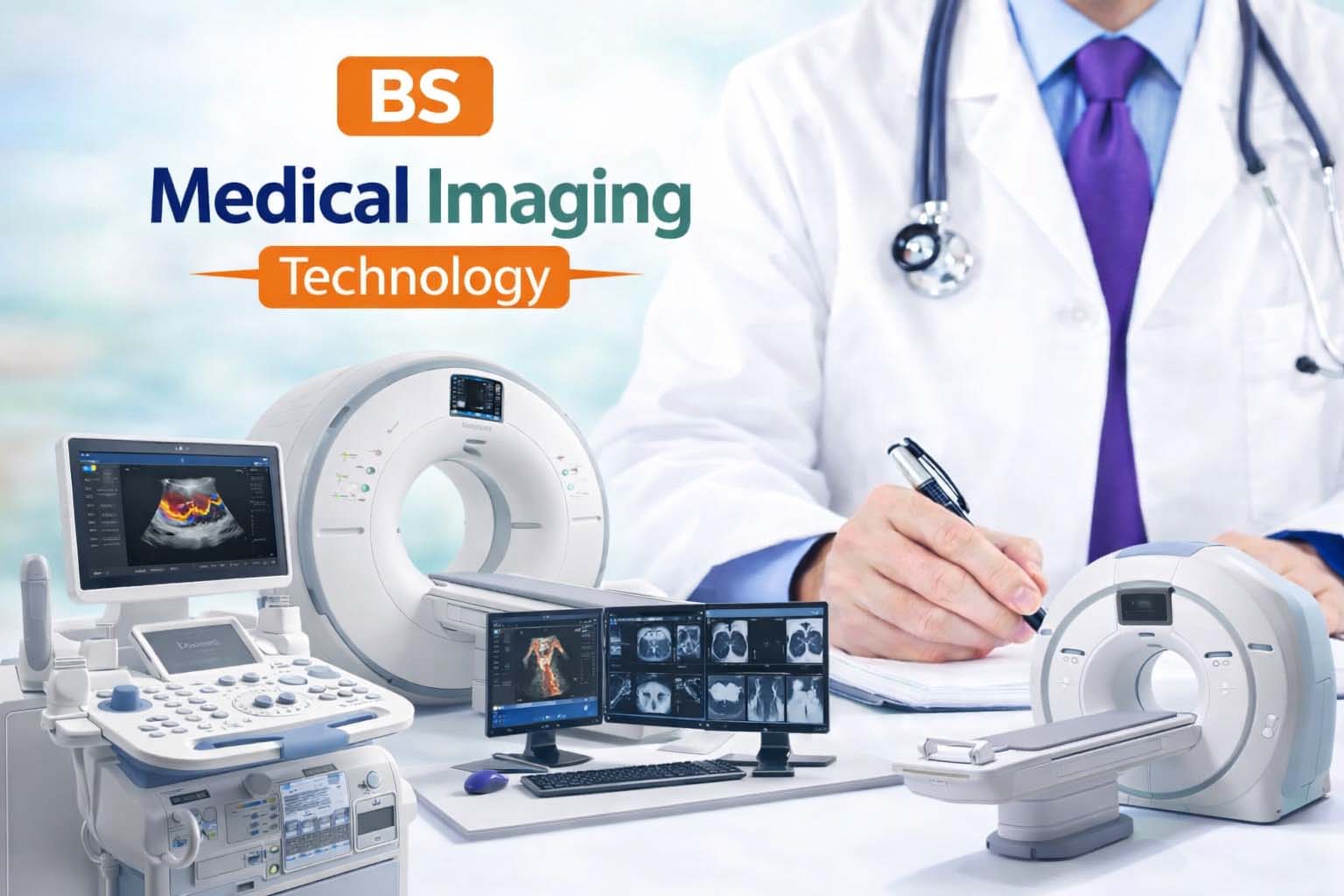
BS Medical Imaging Technology
4 years Bachelor program
The Bachelor of Science in Medical Imaging Technology program is an undergraduate radiology program. The purpose of this program is to equip the students with relevant professional knowledge, skills, techniques and ethical values to enable them to apply their acquired expertise at a level between the doctors and the patient for efferent health service delivery. It is based on the techniques and processes used to create images of the human body or parts and function thereof of clinical purposes (medical procedure seeking to reveal/ diagnose or examine disease) or medical science including the study of anatomy and physiology. This program combines the clinical applications with training in the underlying science and technology of image formation in several diagnostic techniques; it also combines the key themes of, understanding how medical images are formed and appreciating what images reveal in the clinical context.
Program Goals:
The BS MIT program aims to:
Prepare graduates for competent professional practice by developing both core and advanced imaging skills
Prepare graduates who can ensure patient safety and comfort
Develop a professional identity and leadership skills
Develop accuracy and meticulousness to attain high levels of ethics and technical proficiency
Access the technical and non-technical skills in a standardized and reproducible environment
Strengthen the decision power and exercise appropriate judgment skills, to be applied especially and during crisis
Develop and analyze innovative strategies for effective communication with the patient and the health care personnel
Demonstrate inter disciplinary team building strategies or effective co-ordination between various allied health disciplines
Demonstrate understanding of the basic concepts of professional behaviors and legal implementations of work environment
Program Objectives
The graduates will:
1. Provide quality images using routine as well as advanced imaging procedures in order to improve diagnostic accuracy and patient care
2. Use digital imaging and information technology equipment competently, through application of the principal and theories of its operation in order to Identify diseases (infections, cancer), injuries (fractures, internal damage), and abnormalities (tumors, blockages) early and accurately.
3. Evaluate performance characteristics of equipment
4. Implement an effective radiation protection program
5. Apply the knowledge of sectional anatomy to relate clinical procedures, facilitating timely interventions and improving patient outcomes
6. Demonstrate an understanding of the principles of exposure selection and image processing, and an ability to apply this knowledge
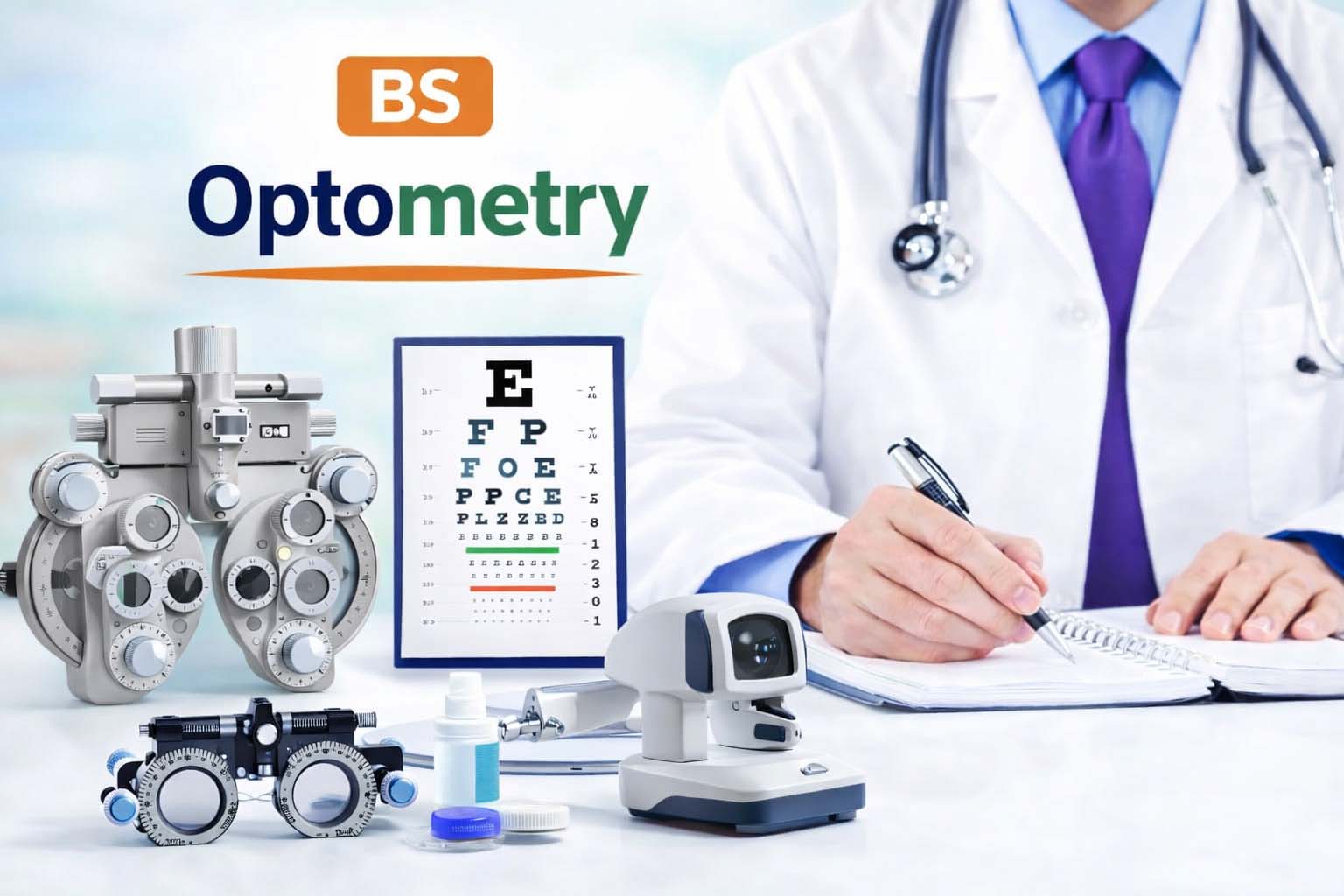
BS Optometry
4 years Bachelor program
“Become an Expert behind Healthy Vision”
The BS-OPT program is a bachelor's degree program in Optometry, offering comprehensive knowledge of ocular health, clinical skills, diagnostic techniques, and vision therapy, adhering to international standards. Optometry professionals are key providers of primary eye care services, specializing in vision assessment, eye health management, and prescription of corrective lenses. They work in hospitals, eye clinics, optical centers, and community health programs to promote visual wellness and prevent vision impairments.
Program Goals
The BS Optometry program aims to:
Produce competent and ethical optometrists with strong clinical skills
Provide a solid foundation in visual sciences, optics, and eye care
Train graduates to diagnose, manage, and prevent visual disorders
Promote evidence-based practice and critical clinical decision-making
Prepare students for community eye health services and prevention of avoidable blindness
Enable graduates to pursue professional practice, higher education, and research
Program Objectives
1. The graduates will be able:
2. To demonstrate clinical competence in vision assessment and eye care.
3. To communicate effectively with patients and other healthcare providers.
4. To integrate research and evidence-based practices into optometric care.
5. To promote preventive eye care and community awareness.
6. To uphold ethical practices and assume leadership roles in the field of optometry.
7. To address the impact of social, economic, and cultural factors on eye care services.
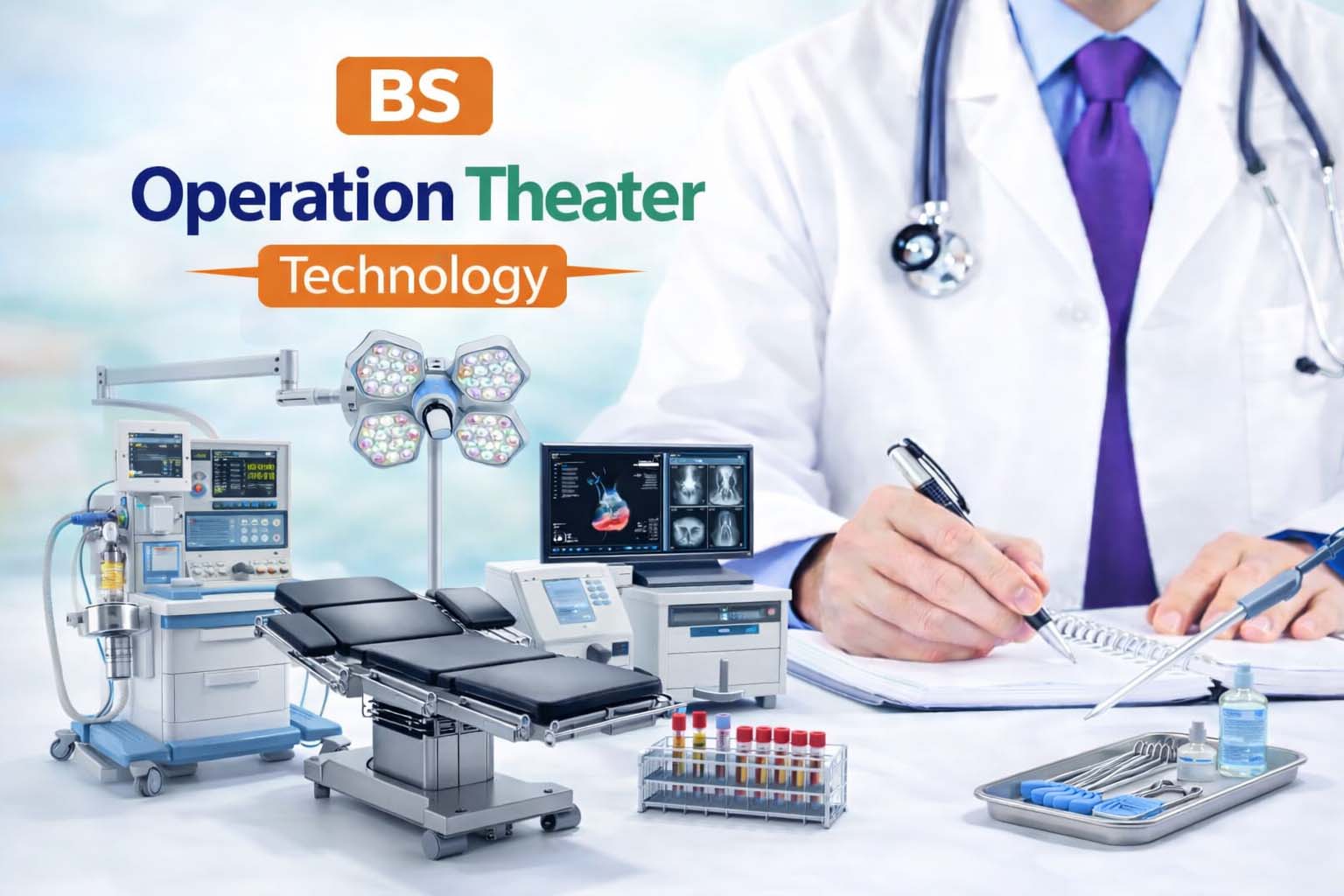
BS Operation Theater Technology
4 years program
‘‘Your skills: The surgeon’s strength. The patient’s hope.”
“Be the precision behind every successful surgery.”
The Bachelor of Science in Operation Theater Technology (BS OTT) is an undergraduate allied health sciences program designed to prepare competent operation theater technologists. The purpose of this program is to equip students with professional knowledge, practical skills, technical expertise, and ethical values required to function effectively as a vital link between surgeons, anesthetists, nursing staff and patients.
The program focuses on perioperative patient care, surgical assistance, operation theater management, sterilization techniques, infection control, anesthesia support, and use of surgical instruments and equipment. It integrates theoretical foundations with hands-on clinical training to ensure safe, efficient, and high-quality surgical services. Emphasis is placed on patient safety, aseptic techniques, teamwork, and ethical practice within surgical environments.
Goals of the Program
The BS Operation Theater Technology program aims to:
Prepare graduates for competent professional practice by developing core and advanced operation theater skills
Ensure patient safety, comfort and dignity before, during and after surgical procedures.
Develop professional identity, leadership qualities and accountability.
Foster accuracy, vigilance and meticulousness to achieve high ethical and technical standards
Provide standardized and reproducible training in both technical and non-technical skills.
Strengthen decision-making and judgment skills, particularly in emergency and critical situations.
Develop effective communication strategies with patients, surgeons, anesthetists, and healthcare teams.
Promote interdisciplinary teamwork and coordination among allied health professionals.
Develop understanding of professional conduct, hospital policies, and legal aspects of the surgical work environment.
Objectives
1. Upon completion of the program, graduates will be able to:
2. Assist surgeons and anesthetists competently during routine and advanced surgical procedures.
3. Prepare and maintain a sterile surgical environment by applying principles of asepsis and infection control.
4. Handle, operate, and maintain surgical instruments, equipment, and operation theater technology effectively.
5. Apply principles of anesthesia technology and assist in anesthesia procedures under supervision.
6. Implement patient positioning, pre-operative preparation, and post-operative care protocols.
7. Demonstrate knowledge of human anatomy, physiology and surgical pathology relevant to operative procedures.
8. Apply principles of emergency management, basic life support and trauma care within the operation theater.
9. Evaluate operation theater workflow, equipment performance and safety standards
10. Apply principles of management, organization behavior, supervision, inventory control, budgeting, human resource management and labor relations within an operation theater setting.
11. Provide surgical assistance and work as a part of surgical scrubbed team.
12. Work in managerial positions like Shift In charge , OT Coordinator, OT Supervisor, Operating Room Manager(ORM) and CSSD Manager and ensure smooth running of operation theater

BS Human Nutrition & Dietetics
4 years Bachelor program
“Build a Career that Transforms Lives through Nutrition”
Human Nutrition and Dietetics is a vital discipline in modern health care, combining the science of nutrition with the art of therapeutic care. It focuses on assessing and managing nutritional needs to prevent disease, support treatment, and promote overall health. The field spans clinical nutrition, critical care, community health, and research, enabling professionals to provide evidence-based interventions, nutrition education, and rehabilitation to improve quality of life across the lifespan.
Program Goals
The Human Nutrition and Dietetics program aims to develop skilled and professional graduates who can:
Develop competent and skilled nutrition professionals for clinical, community, and public health settings.
Promote health, prevent disease, and support nutritional rehabilitation across the lifespan.
Foster evidence-based practice, research skills, and application of scientific knowledge in nutrition and dietetics.
Prepare graduates to assume leadership roles and uphold professional ethics in dietetics and nutrition management.
Address social, cultural, economic, and environmental factors influencing nutrition and public health.
Program Objectives
Graduates of the BS-HND program will be able to:
1. Assess, plan, and implement evidence-based nutrition interventions in clinical, critical care, and community settings.
2. Communicate nutrition knowledge effectively to individuals, groups, and communities.
3. Apply research findings and integrate evidence-based practices to improve nutritional care.
4. Promote health, prevent disease, and provide nutritional rehabilitation across all stages of life.
5. Demonstrate professional ethics, leadership, and teamwork in dietetics and nutrition practice.
6. Recognize and address social, cultural, economic, and environmental factors affecting nutrition and public health.